Questions about biological parentage can involve emotions, family relationships, financial responsibilities, and important legal matters. A Paternity DNA Test Philippines can provide scientific information that helps determine whether a man is the biological father of a child. Modern DNA testing examines specific genetic markers inherited by a child from both biological parents. When the DNA profiles of the child and alleged father are compared, the laboratory can determine whether the genetic evidence supports or excludes biological paternity. The process can be used for personal knowledge, family-related concerns, or circumstances where documented DNA evidence may be relevant to legal proceedings. However, biological paternity and legal recognition of paternity are separate matters that may involve different procedures. Understanding how testing works, what the results mean, and what to consider before arranging a test can help families make informed decisions.
Understanding a Paternity DNA Test in the Philippines
A paternity DNA test is a laboratory examination used to determine whether a particular man is the biological father of a child. The test works by comparing genetic markers found in the DNA of the child and the alleged father. Because children inherit genetic material from their biological parents, certain DNA characteristics can be compared to determine whether the alleged father is genetically consistent with the child’s profile. A properly performed Paternity DNA Test Philippines can provide powerful scientific evidence about biological parentage. Testing may be requested by fathers, mothers, adult children, or other individuals who need reliable information about a biological relationship. The reason for testing can range from personal uncertainty to family-related or legal concerns. It is important, however, to understand that a DNA result by itself does not automatically alter civil records or establish every legal right associated with parenthood.
How Paternity DNA Testing Works
DNA is genetic material found throughout the human body, and each person has a distinctive genetic profile. A child receives approximately half of their nuclear DNA from the biological mother and the other half from the biological father. A paternity laboratory examines selected genetic markers from the child and compares them with markers from the alleged father. The laboratory looks for genetic patterns that are consistent with biological inheritance. If the alleged father’s genetic profile cannot account for the required paternal markers found in the child, biological paternity may be excluded. If the profiles are consistent, the laboratory calculates a statistical probability of paternity based on the tested markers and population genetics. This scientific comparison allows a Paternity DNA Test Philippines to provide substantially more reliable information than assumptions based on physical appearance, resemblance, or family history.
When a Paternity DNA Test May Be Needed
There are many reasons why someone may consider DNA paternity testing. A father may want biological confirmation of his relationship with a child, particularly when questions about parentage have existed for some time. A mother may seek testing when establishing biological parentage is important for family planning or other personal matters. An adult child may also request testing to clarify questions about biological ancestry and family relationships. In some situations, paternity information may become relevant to issues involving support, inheritance, civil status, or other family matters. Individuals involved in a legal dispute may need a more formally documented testing process rather than an ordinary private test. Determining the purpose before arranging the test is important because the appropriate collection and documentation procedures can vary depending on how the result will be used.
Private Paternity Testing vs. Legal DNA Testing
Not every DNA paternity test is performed for court or official purposes. A private test may be selected when the participants simply want to know whether a biological relationship exists and do not currently need the report for a legal proceeding. A legal DNA test generally requires stricter procedures for participant identification, sample collection, documentation, and chain of custody. These procedures help demonstrate that the samples analyzed by the laboratory actually came from the identified individuals. If DNA evidence may be submitted to a Philippine court, participants should inform the testing provider of that purpose before samples are collected. Choosing an ordinary home or informational test and later assuming that it automatically satisfies legal requirements can create problems. Anyone seeking a Paternity DNA Test Philippines for a legal matter should therefore ask the laboratory about its legal testing procedures and documentation requirements before proceeding.
What to Expect During a Paternity DNA Test Philippines Procedure
The process usually begins by selecting a DNA testing provider and identifying the purpose of the examination. Participants may then be asked to provide personal information and complete consent or authorization forms, depending on the testing circumstances. For many standard paternity tests, DNA can be collected using a buccal swab taken from inside the cheek. The collection itself is generally straightforward and does not require a surgical procedure or blood draw for the typical cheek-swab approach. For legal testing, additional identification and documentation procedures may be required to establish the identity of each participant and maintain an appropriate chain of custody. Once the samples reach the laboratory, technicians analyze the relevant genetic markers and compare the resulting profiles. The laboratory then prepares a report explaining whether the tested genetic evidence supports or excludes biological paternity.
Who Usually Provides Samples?
The standard paternity test generally involves the child and the alleged father. A mother may also provide a sample when the laboratory recommends or requires her participation for the particular testing arrangement. Including the mother’s DNA can sometimes help distinguish maternal genetic contributions from paternal genetic contributions during analysis. Additional relatives may be relevant in special situations where the alleged father cannot provide a sample, although such testing may involve a different type of relationship analysis. The laboratory should explain which participants are needed based on the specific circumstances. When a child is a minor, consent and authorization requirements should be clarified before sample collection. Anyone arranging a Paternity DNA Test Philippines should provide accurate information to the laboratory so that the appropriate participants and procedures can be identified from the beginning.
How Accurate Is a Paternity DNA Test?
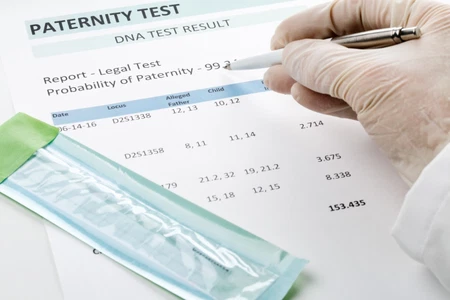
DNA paternity testing is widely used because genetic markers provide highly informative evidence about biological relationships. A paternity report typically includes a Probability of Paternity when the tested man is not excluded as the biological father. The report may also identify genetic exclusions when the man’s DNA profile is inconsistent with the child’s inherited markers. Philippine judicial rules concerning DNA evidence recognize specific standards for interpreting DNA testing results in court. Under the Philippine Rule on DNA Evidence, an exclusion can serve as proof of non-paternity, while a Probability of Paternity of 99.9% or higher creates a disputable presumption of paternity under the rule. These legal standards should not be confused with the simple idea that a single percentage automatically resolves every legal issue involving a child and alleged father. For this reason, people should review the complete laboratory report and seek qualified legal advice when the result is connected to a formal dispute.
Understanding Paternity DNA Test Results
A DNA report can contain technical terminology that may initially seem difficult to understand. One of the most important findings is whether the tested man is excluded or not excluded as the biological father. An exclusion means that the genetic evidence does not support the tested man as the biological father. A non-exclusion means that the man’s DNA profile is consistent with biological paternity and may be accompanied by a calculated Probability of Paternity. The Probability of Paternity is a statistical measure rather than a simple visual comparison between two people. Readers should avoid interpreting individual genetic markers without considering the laboratory’s complete analysis. When the test is intended for legal purposes, the official report and the procedures used to obtain the samples may be just as important as the scientific findings themselves.
Paternity DNA Testing and Philippine Legal Matters
Biological paternity and legal filiation are related concepts, but they are not identical. A DNA test can provide scientific evidence concerning biological parentage, while legal recognition may require additional documents or procedures. Philippine civil registration rules address matters involving acknowledgment of paternity and the use of a father’s surname. The Philippine Statistics Authority explains that Republic Act No. 9255 and its implementing rules recognize documents such as an Affidavit of Admission of Paternity, a Private Handwritten Instrument, and an Affidavit to Use the Surname of the Father. The applicable civil-registration procedure can depend on the circumstances surrounding the child’s birth, acknowledgment, and existing records. Therefore, someone who receives a positive paternity DNA result should not assume that the DNA report automatically changes the child’s birth certificate or civil status. Individuals dealing with these matters should consult the appropriate civil registry office or a qualified Philippine attorney for guidance specific to their situation.
Privacy and Confidentiality During DNA Testing
DNA testing involves sensitive biological information, so privacy should be considered before choosing a provider. Participants should ask how samples are identified, stored, processed, and eventually handled after testing is completed. It is also useful to understand who is authorized to receive the final report. Parents should pay particular attention to privacy when a minor is involved because the child’s genetic information is part of the testing process. A reputable provider should be able to explain its procedures for protecting participant information and releasing test results. Individuals should also ask whether samples are retained after testing and whether additional testing can be performed using stored material. Taking these precautions can help participants make a more informed decision when arranging a Paternity DNA Test Philippines.
Choosing a Paternity DNA Testing Provider
Choosing the right testing provider is an important part of obtaining dependable DNA evidence. Prospective clients should look for a provider that clearly explains its testing methods, sample collection procedures, laboratory process, and reporting standards. If the result may be used in court, participants should specifically ask whether the provider offers legally documented testing with appropriate identity verification and chain-of-custody procedures. Transparent information about fees, turnaround times, sample requirements, and report delivery can also help prevent misunderstandings. Participants should be cautious about choosing a provider based solely on the lowest advertised price. The laboratory’s procedures, qualifications, quality controls, documentation, and suitability for the intended purpose deserve careful attention. Asking detailed questions before paying for a Paternity DNA Test Philippines can help ensure that the selected service matches the participant’s actual needs.
Factors That Can Affect the Testing Process
Several factors can influence how smoothly a paternity DNA test proceeds. Samples need to be collected correctly and matched to the correct participants. For legal testing, incomplete identification or documentation can create additional issues because the laboratory must be able to establish the identity and handling history of each sample. Participants should follow all collection instructions provided by the laboratory. They should also provide accurate names and other requested information when completing testing documents. Special circumstances, such as an unavailable alleged father or the need to test additional relatives, may require a different testing strategy. Discussing these circumstances with the laboratory before collection can help determine whether the standard testing procedure is appropriate.
What to Consider Before Booking a Paternity DNA Test Philippines
Before booking a test, participants should first determine why they need the DNA result. Someone seeking personal information may have different requirements from someone preparing evidence for a legal proceeding. The participants should then ask what samples are required and whether identification documents are necessary. They should also confirm whether the test will be performed through an approved collection process suitable for the intended purpose. Cost, turnaround time, report format, privacy policies, and sample handling should all be discussed before testing begins. If the result could affect child support, inheritance, civil registration, custody, or another legal matter, professional legal guidance may be appropriate. Taking time to understand these factors can make the Paternity DNA Test Philippines process clearer and help participants avoid unnecessary complications.
FAQ About Paternity DNA Test Philippines
What is a Paternity DNA Test Philippines?
A Paternity DNA Test Philippines is a genetic examination that compares the DNA of a child with the DNA of an alleged father. The laboratory analyzes selected genetic markers to determine whether the tested man’s genetic profile is consistent with biological fatherhood. The test can provide either an exclusion or a statistical probability supporting paternity. The exact report format varies between laboratories. Participants should ask the provider how the findings will be presented before testing begins. When a test is intended for legal use, additional documentation and collection requirements may apply.
How accurate is a paternity DNA test?
A properly performed DNA paternity test can provide very strong scientific evidence concerning biological fatherhood. The laboratory generally reports a Probability of Paternity when the alleged father is not excluded. Philippine rules governing DNA evidence provide specific treatment for paternity findings in court, including the significance of a 99.9% or higher Probability of Paternity. The accuracy of the result also depends on proper sample identification, collection, handling, and laboratory analysis. Participants should therefore select a qualified testing provider and follow all instructions carefully. A laboratory report should be reviewed as a complete document rather than relying on a single number without context.
Can a paternity DNA test be used in court in the Philippines?
DNA evidence can be relevant to Philippine court proceedings when the applicable evidentiary requirements are met. A test intended for legal proceedings should be arranged as a legal DNA test rather than an ordinary private test. Proper identity verification, sample collection, documentation, and chain of custody can be important factors. Participants should tell the laboratory in advance that the test may be used in court. Legal advice can also be valuable when the DNA result is connected to an active dispute. The specific legal effect of the result depends on the facts and applicable Philippine law.
What samples are used for paternity testing?
Many paternity tests use buccal or cheek-cell samples because they are convenient to collect. A swab is typically taken from inside the participant’s cheek to obtain cells containing DNA. The laboratory then extracts and analyzes the DNA from the collected material. The exact collection process depends on the provider and whether the test is private or legally documented. Participants should follow the laboratory’s instructions carefully to avoid collection problems. The provider can explain whether additional samples or participants are necessary for a particular situation.
Does a DNA test automatically change a child’s birth certificate?
No, a DNA report and civil-registration procedures are separate matters. Philippine rules provide specific processes for acknowledgment of paternity and use of the father’s surname. The Philippine Statistics Authority identifies documents such as an Affidavit of Admission of Paternity and an Affidavit to Use the Surname of the Father under the applicable rules. Depending on the circumstances, documents may need to be filed with the appropriate Local Civil Registry Office. A person should not assume that receiving a positive DNA result automatically changes an existing civil record. Anyone dealing with birth-certificate changes should obtain guidance from the appropriate civil registry authority or a qualified legal professional.
Is a private DNA test the same as a legal DNA test?
A private test and a legal DNA test can involve similar scientific DNA analysis, but their collection and documentation procedures may differ. A private test is generally designed to provide personal information to the participants. A legal test is structured to document the identity of the participants and maintain an appropriate chain of custody. These procedures can be important when the report may be presented as evidence. Participants should tell the laboratory about the intended purpose before samples are collected. Choosing the appropriate test at the beginning can prevent problems later.
How long does a paternity DNA test take?
Turnaround time varies depending on the testing provider and the specific service selected. The laboratory may need time for sample collection, transportation, DNA extraction, analysis, quality checks, and report preparation. Legal testing can involve additional administrative steps because participant identification and documentation need to be completed properly. Some laboratories may offer expedited processing for an additional fee. Participants should ask for the expected turnaround time before paying for the service. They should also confirm whether the stated processing period begins when the sample is collected or when the laboratory receives the sample.
Can the mother participate in the DNA test?
Yes, the mother can participate in a paternity DNA test when the laboratory determines that her sample is useful or appropriate. The basic comparison can generally focus on the child and alleged father. Adding the mother’s DNA may provide additional information about which genetic markers were inherited maternally. The need for the mother’s participation depends on the testing circumstances and laboratory procedures. Participants should ask the provider which individuals should be tested before the appointment. Providing accurate information about the family circumstances can help the laboratory recommend an appropriate testing arrangement.
Takeaway
A Paternity DNA Test Philippines can provide valuable scientific information when there are questions about biological fatherhood. The process usually involves comparing DNA profiles from a child and alleged father to determine whether the genetic evidence supports or excludes biological paternity. People considering testing should first identify whether they need a private test for personal knowledge or a legally documented test for possible use in court. Proper participant identification, sample collection, documentation, and laboratory procedures are especially important for legal testing. A DNA result should also be distinguished from the separate legal and civil-registration processes used to establish or record filiation. Philippine civil-registration rules provide specific procedures concerning acknowledgment of paternity and the use of a father’s surname. By understanding the testing process, result terminology, privacy considerations, and legal implications, families can approach DNA testing with greater clarity and make decisions based on reliable information.