Nearsightedness can significantly affect daily life, making simple tasks like reading signs or driving at night challenging. Phakic IOL offers a long-term solution for myopia, helping patients regain clear vision without removing the eye’s natural lens. Unlike LASIK or other refractive surgeries, Phakic IOL provides a safe, effective alternative for patients with moderate to high nearsightedness. This procedure has gained attention in the Philippines and worldwide due to its precision, durability, and minimal recovery time.
Phakic IOL, also known as implantable contact lens (ICL), is designed to work with the eye’s natural lens, leaving it intact while correcting vision. Patients who are not ideal candidates for LASIK because of thin corneas or extreme myopia can benefit greatly from this procedure. With careful evaluation and surgical expertise, Phakic IOL can restore vision to a level where glasses or contact lenses are no longer necessary.
What is Phakic IOL?
Phakic IOL is an intraocular lens implanted into the eye to correct nearsightedness, with the natural lens left in place. The term “phakic” refers to the presence of the eye’s original lens. This procedure differs from pseudophakic IOL implantation, which occurs after cataract surgery when the natural lens has already been removed.
There are different types of Phakic IOL, categorized by their placement within the eye. Anterior chamber Phakic IOL is positioned in front of the iris, while posterior chamber Phakic IOL sits behind the iris and in front of the natural lens. Both types are made from biocompatible materials, such as soft silicone or plastic, designed to be safe for long-term implantation.
Phakic IOL works by correcting refractive errors that cause blurred vision. When light enters the eye, it must focus directly on the retina to create a clear image. Myopia occurs when the eye focuses light in front of the retina, resulting in blurry distance vision. Phakic IOL adjusts the eye’s focusing power, enabling sharp vision without the constant use of glasses or contact lenses.
How Phakic IOL Works
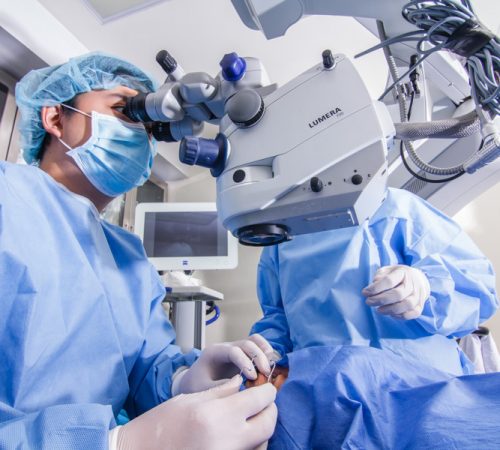
Phakic IOL is surgically implanted through a small incision at the front of the eye, often no larger than a few millimeters. This procedure allows the lens to be inserted safely and positioned either in front of or just behind the iris, depending on the type chosen for the patient. The lens is customized to the patient’s prescription, ensuring precise correction of myopia.
The materials used in Phakic IOL are flexible, allowing for easy insertion while being strong and durable enough to last for decades. Once in place, the lens functions similarly to the eye’s natural lens, bending light so it focuses correctly on the retina. This process eliminates or significantly reduces blurry vision caused by myopia.
Recovery from Phakic IOL surgery is usually fast, with most patients noticing improved vision within a few days. Unlike corneal refractive surgeries, the natural lens remains untouched, reducing the risk of certain complications and preserving the eye’s natural ability to accommodate. Regular follow-ups ensure the lens remains properly positioned and the eye remains healthy.
Who is a Candidate for Phakic IOL?
Phakic IOL is ideal for patients with moderate to high nearsightedness who are not suitable candidates for LASIK or other laser-based procedures. Individuals with thin corneas, irregular corneal shape, or extreme prescriptions often benefit the most. A comprehensive eye examination is required to determine eligibility, including measurements of corneal thickness, anterior chamber depth, and overall eye health.
Candidates for Phakic IOL should be over 18 years old and have stable vision for at least one year. Patients with certain eye conditions, such as severe glaucoma, cataracts, or retinal disorders, may need alternative treatments. Consulting an experienced ophthalmologist ensures that the procedure is appropriate and that expected outcomes align with the patient’s goals.
Patients considering Phakic IOL must understand that while the procedure corrects nearsightedness, it does not prevent age-related eye conditions such as presbyopia. Those over 40 may still require reading glasses for close-up tasks, though distance vision can be significantly improved with Phakic IOL.
Benefits of Phakic IOL
Phakic IOL offers numerous benefits for nearsighted patients. One of the main advantages is permanent correction of vision without removing the natural lens. This allows the eye to retain its natural focusing ability, minimizing long-term changes in vision quality. Unlike laser surgery, Phakic IOL is reversible; if needed, the lens can be removed or replaced.
Another benefit is rapid visual recovery. Many patients experience improved vision within a few days after surgery, allowing them to return to daily activities quickly. The procedure provides excellent results for high prescriptions that are difficult to correct with LASIK or contact lenses. Phakic IOL also avoids the potential side effects of corneal surgery, such as dry eyes or reduced corneal thickness.
Compared to LASIK, Phakic IOL offers stable and predictable results for patients with extreme myopia. It provides crisp vision across all distances and reduces the dependence on corrective eyewear. For individuals seeking a permanent solution without altering the cornea, Phakic IOL presents a safe and effective option.
Risks and Considerations
Like any surgical procedure, Phakic IOL carries certain risks. Potential complications include lens displacement, cataract formation, increased intraocular pressure, or rare infections. These risks are minimized through careful patient selection, proper surgical technique, and thorough post-operative care.
Patients are advised to follow up regularly to monitor eye health and ensure the lens remains correctly positioned. Routine eye exams can detect any early changes and prevent complications. Although the procedure is generally safe, discussing potential risks with an experienced ophthalmologist is crucial before undergoing surgery.
Long-term considerations include monitoring for age-related eye changes, such as cataracts, that may require additional treatment. Phakic IOL can be removed or exchanged if necessary, providing flexibility for future eye care needs.
Why Choose Peregrine Eye and Laser Institute?
Peregrine Eye and Laser Institute (PELI) has established itself as a leading center for advanced eye care in the Philippines. With clinics in Makati, Manila, and Quezon City, PELI combines modern facilities, cutting-edge technology, and expert medical staff to provide exceptional care for patients considering Phakic IOL.
The ophthalmologists at PELI are trained in globally recognized institutions such as Harvard Medical School, Johns Hopkins University, UCLA, California Pacific Medical Center, University of Wisconsin, and Singapore National Eye Center. With decades of surgical and clinical experience, the team delivers precise and personalized care.
PELI’s clinics feature state-of-the-art operating theaters and advanced diagnostic equipment to ensure safe and effective Phakic IOL implantation. Patients benefit from a welcoming and comfortable environment, attentive staff, and streamlined scheduling. The institute prioritizes patient well-being and recovery, offering comprehensive support before, during, and after surgery.
Takeaway
Phakic IOL offers a reliable and permanent solution for nearsightedness, restoring clear vision and reducing reliance on glasses or contact lenses. With fast recovery, excellent results for high prescriptions, and the ability to retain the natural lens, Phakic IOL is a preferred option for many patients seeking long-term vision correction. Peregrine Eye and Laser Institute provides world-class care, experienced surgeons, and advanced facilities to ensure safe and effective Phakic IOL implantation. Patients seeking improved vision can schedule a consultation with PELI ophthalmologists to determine if Phakic IOL is the right solution for their eyes.
Frequently Asked Questions
Can Phakic IOL correct high myopia?
Yes, Phakic IOL is especially effective for patients with moderate to high myopia that cannot be corrected with LASIK or other laser procedures.
How long does the surgery take?
Phakic IOL implantation typically takes less than 30 minutes per eye. Most patients notice improved vision within a few days.
Is the procedure painful?
The surgery is performed under local anesthesia, so patients experience minimal discomfort. Most describe a slight pressure sensation rather than pain.
Can the lens be removed or replaced if needed?
Yes, Phakic IOL is reversible. The lens can be removed or exchanged if necessary due to prescription changes or other eye conditions.
How long does Phakic IOL last?
Phakic IOL is designed to last for decades. Regular eye check-ups are essential to ensure the lens remains properly positioned and the eye stays healthy.
Who should avoid Phakic IOL?
Patients with certain eye conditions, including severe glaucoma, cataracts, or retinal disorders, may not be suitable candidates. Comprehensive evaluation by an ophthalmologist is required.